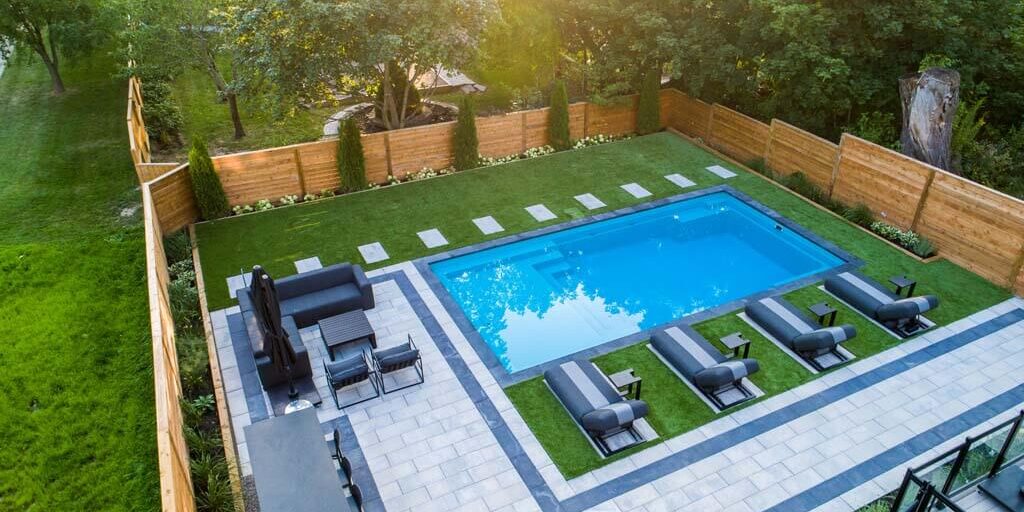
A fiberglass pool can look elegant, permanent, and custom when the space around it is designed properly. The pool shell matters, but the finished look depends on the details surrounding it: coping, patio levels, grading, planting, lighting, seating, and how the pool connects to the home.
This is especially important for fiberglass pools that Toronto homeowners choose for modern backyards. The pools are manufactured shells, so if the landscape around them is not carefully planned, they can sometimes look “dropped in.” But with the right design approach, they can look built in, seamless, and completely intentional.
Why Some Fiberglass Pools Look Dropped In
A fiberglass pool usually looks unfinished when the surrounding backyard is designed after the pool is placed, instead of being planned with the pool from the beginning.
The problem is rarely the pool shell itself. The issue is the transition between the pool and the rest of the yard. If the coping, patio, planting, and levels do not work together, the pool can feel like a separate object rather than a permanent part of the landscape.
Common reasons fiberglass pools may look dropped in include:
- Thin or mismatched coping
- Patio levels that do not meet the pool edge cleanly
- Too many unrelated materials around the pool
- Narrow paving strips with no useful seating or walking space
- Exposed edges that make the shell look separate
- Planting added later instead of planned as part of the design
- Poor connection between the pool, house, and entertaining areas
A built-in look comes from coordination. The pool, hardscaping, planting, and outdoor living zones must feel like one design.
Start with the Pool Position
Before choosing stone, coping, or plants, the pool position should be planned carefully. Placement has a major impact on whether the pool looks built in or added later.
A pool should not be placed only where it technically fits. It should sit where it improves the layout, views, movement, and use of the backyard.
Connect the Pool to the House
A seamless pool should relate to the home. Homeowners should think about how the pool will look from:
- Patio doors
- Kitchen windows
- Family rooms
- Outdoor dining areas
- Existing decks or terraces
- Main backyard seating areas
If the pool looks disconnected from the house, the finished backyard may never feel fully integrated.
For fiberglass swimming pool projects in Toronto, this matters even more in narrow lots, older homes, or compact urban backyards where every sightline is visible.
Plan Movement Around the Pool
A beautiful pool area also needs practical circulation. People should be able to walk from the house to the pool, reach seating areas, move around loungers, and access storage or equipment without awkward turns.
A good pool layout should include:
| Backyard Zone | Purpose |
Design Need |
| Pool edge | Entry, swimming, sitting | Clean coping and safe footing |
| Lounge area | Sunbeds and chairs | Enough depth for furniture |
| Dining area | Meals and hosting | Away from splash-heavy zones |
| Transition path | House to pool | Clear, natural movement |
| Planting edge | Softens the pool area | Controlled, low-maintenance plants |
When these zones are planned together, fiberglass pools in Toronto can feel much more custom and complete.
Use Coping to Frame the Pool
Coping is one of the most important visual details around a fiberglass pool. It caps the pool edge and helps connect the pool shell to the surrounding patio.
Good coping creates a clean frame. Poor coping makes the pool look unfinished.
What Good Coping Should Do
The right coping should:
- Hide the transition between the shell and patio
- Create a strong, finished border
- Complement the patio material
- Feel proportional to the pool size
- Provide a comfortable edge for sitting or entering the water
If Toronto homeowners want their fiberglass pools to look high-end, coping should never feel like an afterthought. It should be selected with the patio, steps, walls, and overall backyard style in mind.
Coping Mistakes to Avoid
The most common mistake is choosing a coping that does not match the rest of the outdoor space.
For example, if the patio uses warm natural stone but the coping is a cold grey tone, the pool edge may stand out awkwardly. Similarly, if the coping is too thin for a large pool, the edge may look weak.
It is also better to avoid too many borders. A pool with coping, a contrast band, another patio material, and a separate planting edge can quickly look busy. A simple, consistent edge usually looks more refined.
Match Patio Levels with the Pool Edge
A pool can look dropped in when the patio height does not meet the pool edge properly. Even a small level mismatch can make the area feel unfinished.
The goal is to create a smooth and intentional transition between the pool, coping, and patio.
Flush and Stepped Transitions
A flush transition gives a sleek, modern look. The patio and coping feel connected, and the pool looks naturally built into the surface.
However, not every Toronto backyard is flat. Some yards have slopes, basement walkouts, older patios, or raised decks. In those cases, step-downs or raised areas may be needed.
The key is to make those level changes look designed. For example, a slightly raised lounge terrace beside the pool can look beautiful when finished with matching stone, clean steps, and a low wall.
Do Not Ignore Drainage
Poolside patios need proper drainage. Water should move away from the house and should not collect around seating areas or pool edges.
Good drainage planning helps prevent puddles, staining, shifting pavers, and slippery surfaces. It also keeps the patio looking clean over time.
For fiberglass pool installation, drainage should be discussed before the hardscaping is finalized, not after the pool is already in place.
Use Grade Changes to Anchor the Pool
Many Toronto backyards have uneven grades. Some slope toward the house. Others slope away. Some include retaining walls, walkouts, raised decks, or older garden beds.
If grade changes are ignored, the pool can look exposed. If they are handled well, they can make the pool feel anchored.
Grade transitions can help:
- Connect different backyard levels
- Create natural steps around the pool
- Frame one side of the pool with a wall or planter
- Improve the relationship between the patio, lawn, and planting
- Make the pool feel designed into the yard
For example, if one side of the pool sits near a higher garden area, a low retaining wall with planting can create a strong backdrop. This makes the pool look settled rather than placed in an open hole.
This is one reason fiberglass pools in Toronto properties with older yards need careful landscape planning.
Repeat Materials from the Home
A pool looks built in when it feels connected to the architecture of the house.
One effective way to achieve this is by repeating materials, colours, or textures already used on the property. The pool area does not need to match everything exactly, but it should feel related.
You can repeat:
- Stone tones from the home exterior
- Pavers from existing walkways
- Wood or composite details from a deck
- Wall cladding from garden features
- Metal accents from railings, fencing, or furniture
For fiberglass pools in Toronto, this is especially useful because many homes combine older architecture with newer outdoor upgrades. A pool can look out of place if the surrounding materials ignore the home’s existing style.
Material continuity makes the entire backyard feel more permanent and thoughtfully designed.
Use Seat Walls and Raised Planters
Seat walls, raised planters, and low retaining edges can make a fiberglass pool feel more custom. These built elements add structure around the pool and help it feel part of a larger outdoor room.
They are especially useful when the pool sits near a fence, slope, patio edge, or outdoor kitchen.
Where Built Elements Work Well
Seat walls and planters can be placed:
- Behind the long edge of the pool
- Between the pool and the fence line
- Beside a lounge area
- Around a grade change
- Near an outdoor dining zone
- Between the patio and the planting beds
A raised planter behind the pool can soften a plain fence and create a finished backdrop. A seat wall can add casual seating without overcrowding the patio with furniture.
These details can make a major difference in creating a refined backyard pool design for Toronto homes.
Keep the Design Balanced
The goal is not to build around every side of the pool. Too many walls or planters can make the space feel crowded.
A better approach is to use one or two strong built elements where they add function, structure, or visual balance.
Soften the Pool Edge with Planting
Planting helps soften the hard edges around a pool. But poolside planting needs to be chosen carefully.
The best planting frames the pool without creating constant maintenance. It should add texture, privacy, and softness without dropping too much debris into the water.
Good poolside planting can:
- Soften hardscape edges
- Add privacy near fences
- Frame the pool from key viewpoints
- Create contrast against stone or pavers
- Make the pool feel settled into the landscape
However, avoid plants that drop leaves, flowers, berries, or seeds directly into the pool. Also, avoid thorny plants near walkways or plants that will quickly outgrow the space.
For pool landscape design, restraint is important. A few controlled planting beds often look better than crowded greenery around every edge.
Design the Pool Area as an Outdoor Room
A pool looks more built in when the backyard works like a complete outdoor room.
That means planning more than the water. Homeowners should think about where people will sit, eat, walk, dry off, store towels, and relax in the shade.
A well-designed pool area may include:
- A lounge zone near the sunniest area
- A dining zone away from splash-heavy edges
- A shaded seating area
- A clear path from the house
- Storage for towels, toys, or cushions
- Lighting for evening use
- Planting to soften fences and hardscape
This level of planning makes fiberglass pools feel natural in everyday life, not just attractive in photos.
The pool should not feel isolated in the middle of the yard. It should connect with the patio, furniture, planting, and home.
Use Lighting to Finish the Look
Lighting can help a fiberglass pool feel more integrated at night. It highlights the details that make the pool feel built in, such as coping, steps, walls, planters, and pathways.
Good lighting should be subtle. The goal is not to flood the yard with brightness. It is to guide movement, improve safety, and create atmosphere.
Poolside lighting can highlight:
- Steps and level changes
- Seat walls
- Raised planters
- Pathways
- Lounge areas
- Architectural details
- Planting behind the pool
For pool hardscaping, lighting is often what makes the design feel finished after sunset.
Common Mistakes That Make Fiberglass Pools Look Unfinished
Even a good pool can look incomplete if the surrounding details are weak.
|
Mistake |
Why It Hurts the Design |
Better Approach |
| Designing the pool first and patio later | The pool feels separate | Plan the pool and landscape together |
| Using mismatched coping | The edge looks disconnected | Choose coping with the patio in mind |
| Ignoring patio levels | The pool may look sunken or raised | Coordinate grades early |
| Adding too many materials | The space feels busy | Use fewer, better-matched finishes |
| Leaving no seating space | The pool area becomes impractical | Plan lounge and dining zones |
| Planting too close to water | Creates debris and maintenance | Use controlled planting beds |
| Ignoring views from the house | The pool may look awkward | Design around major sightlines |
Avoiding these mistakes helps your fiberglass swimming pool in Toronto look polished, not pieced together.
How LandCon Creates Seamless Pool Landscapes
At LandCon, a pool is not treated as a standalone feature. It is planned as part of a complete backyard environment.
That includes the home’s architecture, property grading, patio layout, coping details, planting, lighting, seating zones, and outdoor living flow.
For homeowners considering fiberglass pools in Toronto, this approach is important because the final result depends on what surrounds the pool. A well-designed pool surround can make a fiberglass shell look custom, permanent, and naturally connected to the property.
LandCon brings landscape design and construction knowledge together so the pool area feels seamless from every angle.
Frequently Asked Questions (FAQs)
1. How do you make a fiberglass pool look built-in?
You make a fiberglass pool look built-in by planning the coping, patio levels, grade transitions, hardscaping, planting, lighting, and seating zones around the pool before the surrounding landscape is finished.
2. What makes a fiberglass pool look unfinished?
A fiberglass pool looks unfinished when the coping, patio, planting, and levels feel disconnected. Exposed edges, mismatched materials, poor grading, and narrow paving strips can make the pool look dropped in.
3. Can fiberglass pools in Toronto look custom?
Yes. Fiberglass pools in Toronto can look custom when the surrounding landscape is designed with the right coping, stonework, patio layout, planting, lighting, and outdoor living zones.
4. Does coping make a fiberglass pool look more finished?
Yes. Coping frames the pool edge and connects the shell to the patio. Well-chosen coping makes the pool look more polished, permanent, and built in.
Design a Fiberglass Pool That Looks Made for Your Home
A fiberglass pool should never feel like an afterthought. With the right poolside hardscaping, coping, planting, lighting, and outdoor living layout, it can look seamless, custom, and built into your backyard from the start.
LandCon helps homeowners plan every detail around the pool, so the final space feels polished, practical, and connected to the home. Whether you are starting with a new pool project or refining your backyard vision, our landscape design team can help you create an outdoor space that looks intentional from every angle.
Book your pool landscape design consultation with LandCon at 416.504.5263 or at info@landcon.ca.