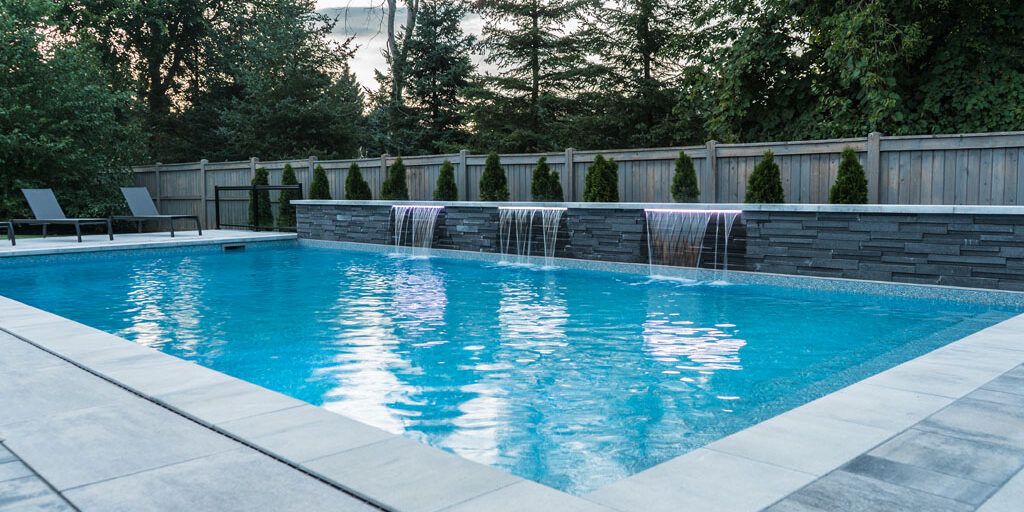
When planning a new backyard oasis, most homeowners immediately focus on the exciting details. You likely think about the water colour, the patio stones, and the shape of the pool. However, long before the design takes shape, builders are looking at the dirt. Site-readiness is the true foundation of any successful project.
Access, grading, and drainage are among the very first things professional pool builders assess before excavation begins. These three crucial elements do not just dictate how the build will happen. They directly affect your project timeline, the final cost, your municipal permit approvals, and the long-term performance of your pool.
For homeowners across the Greater Toronto Area, factoring in these local variables is critical. The GTA presents unique challenges like narrow urban lots, heavy clay soil, and strict municipal compliance rules. A flawless vinyl pool installation requires a builder who understands how to navigate these local hurdles right from the start.
Why Access Is the First Step in Vinyl Pool Installation
Before any construction can begin, builders must figure out how to get heavy equipment and materials safely into your backyard. A brilliant pool design means nothing if an excavator cannot actually reach the dig site. Assessing access is a critical first step for any vinyl pool installation.
1. Backyard Entry and Equipment Access
The physical path to your backyard dictates the entire construction approach. Builders measure the width of side yard gates and pathways to see what machinery can pass through. Many narrow urban Toronto lots have zero lot lines or extremely tight side yards. In these cases, builders look for alternative entry points like rear alley access. If the space is completely blocked off, fence removal might be necessary. In extreme cases where heavy materials must go over a house, builders will evaluate the site for crane access.
2. Space Needed for Excavation Machinery
The size of the access path determines the size of the machinery. A massive full-size excavator makes quick work of a pool dig but requires substantial room to maneuver. If your yard only allows for a mini excavator, the digging process will naturally take longer. Builders also map out the material delivery paths and figure out how the soil removal trucks will get in and out of the neighbourhood without damaging local property.
3. Overhead and Underground Obstacles
Access is not just about the ground level. Builders must look up and look down. Low-hanging hydro lines or large tree branches can block tall machinery from entering safely. Underground, tree roots can create massive delays during the dig. Crucially, excavation crews need to pinpoint any hidden plumbing, gas pipes, and power grids beneath the soil. Requesting official utility locates is a mandatory step before any excavation can legally or safely occur.
4. How Poor Access Can Delay Vinyl Pool Installation
When access is restricted, the complexity of the project increases. Poor access can lead to significant delays in your vinyl pool installation. If machinery simply cannot fit, builders must resort to manual hand-digging. This dramatically increases manual excavation costs and adds weeks of extra labour. If a crane is required to lift equipment over your home, you will face delays while waiting for specialized crane permits and municipal road occupancy permits.
What Builders Check During Site Grading for Vinyl Pool Installation
Grading refers to the level and slope of your land. It is arguably the most vital structural assessment builders perform. Proper site grading guarantees that your pool sits level and remains structurally sound for decades.
1. Existing Yard Slope and Elevation
Very few backyards are perfectly flat. Builders measure the existing yard slope and elevation to identify the highest and lowest points of your property. Building on a flat lot is straightforward. Building on a sloped lot requires careful calculation. The natural slope dictates how deep the excavation must go on the high side and how much built-up support is required on the low side to keep the pool perfectly level.
2. Soil Stability and Compaction
The type of dirt in your yard matters just as much as the slope. The Toronto area is famous for its clay-heavy soil. Clay holds moisture and expands, which poses serious settlement risks. Builders assess soil stability and compaction to ensure the ground can hold the massive weight of a filled pool. They also factor in the extreme freeze-thaw movement inherent in Canadian winters. The ground heaves when it freezes, so the surrounding soil must be properly compacted and prepared to handle this natural shifting.
3. How Improper Grading Causes Structural Problems
Skipping proper grading assessment is a recipe for disaster. If a pool is installed on poorly graded or uncompacted land, gravity and water will eventually cause severe damage. You might end up with an uneven pool floor or visibly shifting walls. The surrounding concrete deck can easily settle and crack. Furthermore, shifting ground is one of the leading causes of devastating wrinkles and tears in vinyl pool liners. A level, stable base is absolutely non-negotiable.
4. Retaining Walls and Grade Corrections
When a yard has a severe slope, natural grading corrections might not be enough. Builders will determine when retaining walls are required to hold back tons of earth safely. Split-level backyards often need engineered retaining walls integrated directly into the pool design. These walls not only protect the pool structure but also provide essential support for the surrounding deck areas and patios.
Request a Site Evaluation!
Why Drainage Can Make or Break a Vinyl Pool Installation
Water is heavy and relentless. While you want water inside your pool, you must keep unwanted ground and surface water far away from the exterior pool walls. Proper drainage planning is the ultimate defence mechanism for your backyard investment.
1. Surface Water Drainage Around the Pool
When heavy rain hits your backyard, that water needs a place to go. Builders design surface water drainage systems to direct rainwater away from the pool structure. This involves precise deck slope planning. The concrete or stone patio must slope slightly away from the water’s edge. This prevents dirty runoff from entering the pool and stops excess water from collecting and pooling around the exterior steel or polymer walls.
2. Groundwater and Hydrostatic Pressure Risks
This is a massive consideration for any vinyl pool installation. Hydrostatic pressure is the upward force exerted by groundwater trapped under the ground. If the water table rises too high, this pressure can literally push groundwater under the liner. This causes the liner to float up from the pool floor. Once the water recedes, you are left with massive, unfixable wrinkles in your vinyl pool liners. In severe cases, hydrostatic pressure can even cause the structural walls to bow or move.
3. French Drains, Sump Systems, and Drain Tiles
To combat high groundwater and heavy surface runoff, builders implement professional drainage solutions. In high water table areas or heavily sloped lots, professional drainage systems are highly recommended. Builders will often install drain tiles around the perimeter of the pool base. They may also build French drains to naturally redirect water away from the yard. For severe groundwater issues, dedicated sump systems and sump pits are installed to actively pump water away from the pool shell before pressure can build.
4. Drainage Issues That Cause Project Delays
Drainage problems do not just appear after the pool is finished. They can halt construction in its tracks. Hitting an unexpected water table during excavation is a common delay. Saturated, muddy soil makes it impossible to pour a concrete collar or install a smooth pool bottom. Heavy rain delays can wash mud into a freshly dug hole. Furthermore, if your drainage plan does not meet city standards, you will face immediate inspection failures and work stoppages.
How Vinyl Pool Installation Costs Change Based on Access, Grading, and Drainage
Your final quote is heavily influenced by the physical realities of your backyard. Understanding these variables helps you budget accurately for your vinyl pool installation.
1. Access-Related Cost Factors
If your yard is difficult to reach, expect the budget to reflect that challenge. Needing crane access to hoist an excavator over your roof is a major expense. Fence removal and subsequent replacement add to the bottom line. Restricted lot labour costs also apply when crews have to manually wheelbarrow tons of dirt out of a yard because a standard machine cannot fit through the gate.
2. Grading and Excavation Cost Variables
Moving the Earth is expensive. The cost of your excavation depends entirely on how much slope correction is needed. Digging into a steep hill requires moving significantly more dirt than digging a flat yard. Soil removal costs escalate if you need dozens of dump trucks to haul away excess clay. Additionally, if your property requires engineered retaining walls to achieve a level surface, this will be a significant line item in your budget.
3. Drainage System Add-On Costs
Protecting your pool from water damage requires an upfront investment in infrastructure. Trench drains built into the concrete deck add labour and material costs. Subsurface solutions like French drains and automated sump pits increase the scope of work. Builders also use specialized gravel backfill rather than native clay to promote natural water flow around the pool walls, which adds to the material delivery costs.
Common Site Issues Builders Discover Before Vinyl Pool Installation
Every backyard hides a few secrets. A thorough site inspection often reveals hidden challenges that must be addressed before breaking ground. Here are the most common issues builders run into:
- Extremely poor backyard access that restricts standard machinery
- Steep lot grading that requires massive soil removal
- Existing water pooling near the home foundation must be redirected
- Underground utility conflicts crossing directly through the desired pool location
- Massive, established tree root systems that complicate the dig
- Strict municipal setback issues that force a change in the pool layout
Why Professional Site Assessment Matters Before Vinyl Pool Installation
A beautiful pool starts with an honest site evaluation. Booking a pre-construction consultation with an experienced builder is the smartest move you can make. A professional team brings the expertise needed for accurate grading analysis and proactive drainage planning.
When you work with a trusted Toronto builder, they handle the complex permit support process for you. They understand local zoning bylaws and conservation authority rules. By identifying access constraints and soil issues early, a professional builder provides realistic timeline forecasting. This eliminates expensive surprises and guarantees that your vinyl pool installation is built on a solid, legal, and structurally sound foundation.
FAQs About Vinyl Pool Installation Site Checks
1. How much backyard access is needed for vinyl pool installation?
Ideally, builders need a clear pathway that is at least six to eight feet wide to accommodate standard excavation machinery. However, professional teams can work with narrow access points down to three feet by using specialized mini excavators or by implementing manual labour solutions.
2. Can a vinyl pool be installed on a sloped backyard?
Yes. A pool can absolutely be installed on a sloped property. Builders manage this by cutting into the high side of the slope and using the excavated dirt to build up the low side. Engineered retaining walls are often used to stabilize the surrounding earth and create a safe, level deck area.
3. Do I need drainage around a vinyl pool?
Yes, proper drainage is mandatory. Without it, surface water will pool around your patio, and groundwater will exert pressure against the pool structure. Every high-quality vinyl pool installation includes a strategic drainage plan utilizing deck sloping, clear stone backfill, and sometimes sump pits to manage water flow.
4. Will poor grading cause linear wrinkles?
Absolutely. If the ground shifts, settles, or allows water to pool beneath the pool structure, hydrostatic pressure will lift the liner. When the water recedes, it leaves permanent wrinkles and folds in vinyl pool liners. Proper grading and compaction prevent this costly damage.
5. Does drainage affect pool permits in Toronto?
Yes. Municipalities across the GTA require a comprehensive grading and drainage plan before they will issue a pool permit. You must prove that your new pool will not alter the natural flow of water in a way that floods your own property or damages your neighbours’ yards.
Secure a Flawless Foundation for Your Backyard Oasis
Designing your ideal swimming pool in Toronto requires more than just picking the right liner pattern or patio stones. It demands a meticulous approach to site readiness. Our unpredictable Canadian winters, heavy clay soils, and tight urban lot lines mean that your backyard needs a professional eye before a single shovel hits the dirt.
At Luxury Pools, we take the guesswork out of complex grading, tricky access points, and strict municipal drainage permits. Our expert team conducts thorough site assessments to guarantee your new investment remains structurally sound and perfectly level for decades.
Do not let hidden underground surprises delay your summer plans or inflate your budget. Reach out to our experienced design and build team at 416-504-5263 or at info@landcon.ca to schedule your comprehensive pre-construction consultation. Take the first secure step toward your ultimate staycation.