Last updated: August 2026
Direct Answer: Indoor pools offer year-round swimming, privacy, and lower maintenance from debris, but cost more upfront and require ventilation and dehumidification. Outdoor pools cost less to build and run but are limited to warmer months and need more regular cleaning. The right choice depends on your budget, how often you’ll swim, and whether year-round access matters more than a lower upfront cost.
Wondering if you should get an indoor or an outdoor pool? Swimming pools are a great place to relax and rewind. They allow you to exercise and remove the stresses of daily life from your body and mind. They are a great place to entertain your guests.
If you are planning to get a pool for your home and are stuck on choosing between indoor and outdoor pools, here’s some help! Let’s weigh the pros and cons of both pools to help you pick out the better option!
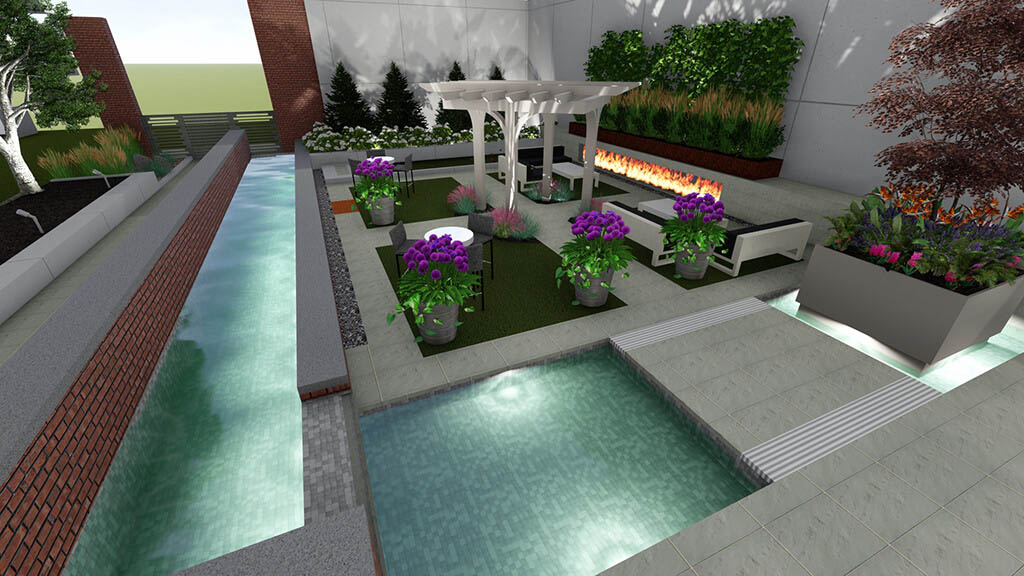
Indoor vs. Outdoor Pools
Expenditure: Outdoor pools are way cheaper than indoor pools. Indoor pools are more expensive because of the construction, equipment required for maintenance, etc.
Maintenance: Indoor pools are easier to maintain when it comes to keeping the water clean. However, they require different kinds of maintenance equipment. Indoor pools need to be well-ventilated to control humidity and remove chemical odors. Outdoor pools may get dirty because of leaves, bugs, and other dirt that fall into the water, making cleaning a regular activity.
Usage: Outdoor pools provide you with the comfort of swimming and sunbathing. However, outdoor pools can be used only when the weather is favorable. While indoor pools can be used throughout the year, they do not give you the warm, sun-kissed feeling that you can get from an outdoor pool.
Chlorine Exposure: In an outdoor pool, the wind will blow away the smell of chlorine. This reduces the risk of inhaling too much chlorine while swimming or lounging on the deck. However, in the case of indoor pools, there is a significant buildup of chemical odors if a good ventilation system is not installed. Excess inhalation of chlorine can lead to several breathing problems and health issues. This is a major concern if children are involved.
When you put an indoor pool vs outdoor pool side by side, the comparison usually comes down to five factors:
| Factor | Indoor Pool | Outdoor Pool |
|---|---|---|
| Upfront Cost | Higher — enclosure, ventilation, dehumidification | Lower — no enclosure or climate systems needed |
| Usable Season | Year-round | Limited to warmer months in Ontario |
| Maintenance | Fewer chemicals, but needs ventilation upkeep | More debris cleaning, weather exposure |
| Privacy | High — fully enclosed | Lower — visible to neighbouring properties |
| Atmosphere | Controlled, no natural sunlight | Open-air, natural light and sun |
Health and Wellness Considerations
Both pool types support the same core physical benefits — swimming is a low-impact, full-body exercise that’s easy on joints and effective for cardiovascular health regardless of where the pool sits. The difference shows up in consistency. An outdoor pool’s usable season in the GTA typically runs from late May through early September, which means any fitness or physical therapy routine built around swimming has a built-in five-to-six-month gap. An indoor pool removes that gap entirely, which matters most for homeowners using the pool for rehabilitation, training, or a daily exercise habit rather than occasional recreation.
There’s a mental health angle too. Consistent access to water — without needing to check the weather forecast first — tends to translate into more regular use. A pool that’s always available gets used more often than one that’s seasonal, and that consistency is often what actually delivers the stress-relief and relaxation benefits people are looking for when they first consider a pool.
How Toronto’s Climate Shapes This Decision
Ontario’s climate makes this choice more consequential than it would be somewhere with a longer natural swim season. With roughly four to five months of genuinely swimmable outdoor weather, an outdoor-only pool sits unused for more than half the year. This is precisely why indoor pools have become more common among GTA homeowners who swim regularly rather than occasionally — the math on cost-per-swim shifts considerably once you account for how many months an outdoor pool actually gets used.
At the same time, Toronto’s winters make outdoor pool ownership more expensive than the base install price suggests, since proper winterizing, spring reopening, and protecting equipment from freeze damage are recurring annual costs an indoor pool simply doesn’t have. Homeowners comparing total cost of ownership rather than just the installation quote often find the gap between indoor and outdoor narrower than expected once these seasonal costs are factored in.
Hybrid Options Worth Considering
The indoor-vs-outdoor decision doesn’t always have to be binary. Some homeowners choose a design that captures elements of both — a retractable roof or wall system that converts an indoor pool into an open-air one during warm months, then seals back up for winter swimming. This tends to cost more than a purely indoor or purely outdoor build, since it requires engineering for both a sealed climate-controlled state and an open-air one, but it directly answers the “which do I choose” question by not forcing a single answer.
Another middle-ground approach some GTA homeowners take is building an outdoor pool first, then adding an enclosed sunroom-style structure over it in a later phase once budget allows. This spreads the total investment across two stages rather than committing to the higher indoor-pool cost all at once, though it generally costs more in total than planning for an indoor build from the start, since retrofitting an enclosure onto an existing outdoor pool involves more construction complexity than building both together.
Additional Advantages of Indoor Pools
Beyond the core trade-offs above, indoor pools come with a few practical benefits that are easy to overlook until you’ve lived with one:
No winterizing required. Outdoor pools in Toronto need to be properly closed down each fall and reopened in spring, with winterizing chemicals, cover installation, and plumbing drainage all adding time and cost. An indoor pool skips this seasonal ritual entirely, since the enclosed environment stays swim-ready year-round.
Full temperature control. Indoor pools are typically equipped with heating systems that let you set the water to your exact preference, any day of the year. Outdoor pools rely more heavily on ambient conditions, and swimming after sundown or outside peak summer often means a noticeably colder dip.
Privacy from neighbours. An enclosed indoor pool removes the sightlines an outdoor pool can have from neighbouring properties, which matters for homeowners who want to swim, relax, or host without an audience.
Protection from sun exposure. Repeated UV exposure while swimming outdoors adds up over a season. An indoor pool lets you swim without the constant need for sunscreen reapplication or the cumulative skin exposure that comes with regular outdoor sessions.
Spontaneous, low-friction access. With an indoor pool, there’s no gathering towels, sunscreen, and pool toys to head outside — the pool is simply part of the house, which tends to mean it actually gets used more often rather than becoming a seasonal novelty.
Customizable lighting and ambiance. Indoor pools give you full control over lighting in a way an outdoor pool can’t — bright and energizing for a morning swim, or dim and calming for an evening one, without depending on natural daylight.
Still Deciding Between Indoor and Outdoor? Talk to Our Team!
The Hidden Cost of Skipping Proper Ventilation
It’s worth being direct about the biggest risk with an indoor pool: moisture management isn’t optional. An indoor pool releases water vapour into the air constantly, even when nobody’s swimming. Without a properly sized dehumidification and ventilation system, that moisture doesn’t just disappear — it shows up as condensation on windows, damp drywall, peeling paint, and musty odours over time. This is the reason indoor pool construction costs more than the pool shell alone suggests; the climate-control system is doing real structural protection work, not just adding comfort.
The upside is that this is a solvable, well-understood problem for an experienced indoor pool builder. It’s simply not something to treat as optional or add later — ventilation and dehumidification need to be part of the design from day one.
Which Pool Is Right for You? A Quick Decision Guide
If cost and budget are your top priority, an outdoor pool wins — it’s cheaper to build and cheaper to run. If year-round access and consistent daily use matter most, an indoor pool is the stronger fit, since it removes the seasonal on/off switch entirely. If privacy is a bigger concern than natural sunlight and open-air atmosphere, lean indoor. If you want the classic backyard entertaining experience — sunbathing, a poolside deck, landscaping integration — an outdoor pool delivers that in a way an indoor pool structurally can’t.
Many homeowners land somewhere in between by starting with an outdoor pool and revisiting an indoor addition later, or by building an indoor pool specifically designed to open up to the outdoors in warmer months. There’s no universally “better” option — only the one that matches how you’ll actually use it.
Indoor and Outdoor pools both have their advantages and disadvantages. Several points need to be factored in before you make the choice. From your budget to the kind of usage, you will have to make an informed choice on the kind of pool you want for your home.
Land-Con Luxury Pools is a leader in swimming pool designs and construction in Toronto. You can reach out to us to help you choose the right pool for yourself! Whichever direction you lean toward, walking through both options with an experienced local builder before committing to a design is usually the best way to avoid regretting the choice a year or two into ownership.
Frequently Asked Questions
Is an indoor pool or outdoor pool better?
Neither is universally better — it depends on your budget, how often you plan to swim, and whether year-round access or open-air atmosphere matters more to you. Outdoor pools cost less; indoor pools offer more consistent, private, year-round use.
Do indoor pools need to be winterized?
No. Since indoor pools stay in a climate-controlled enclosure year-round, they skip the seasonal closing and reopening process that outdoor pools in Toronto require.
Are indoor pools more expensive to maintain long-term?
Indoor pools typically use fewer chemicals and see less wear from debris and weather, which can offset some of the higher upfront cost over time — though ventilation and dehumidification equipment does add its own ongoing maintenance.
Can an indoor pool open up to the outdoors?
Yes. Some indoor pool designs incorporate retractable roofs, large sliding glass walls, or screened sections that blend the indoor and outdoor experience, giving some of the benefits of both.
Is an indoor pool worth it for someone who swims for exercise?
Often, yes. An indoor pool removes the roughly five-to-six-month gap in Ontario’s outdoor swim season, which matters most for homeowners using the pool for regular fitness, training, or physical therapy rather than occasional summer use.
Does Toronto’s climate make indoor pools a better long-term investment?
For frequent swimmers, often yes. Outdoor pools in Toronto are typically usable for only four to five months a year, while ongoing winterizing and spring reopening costs add up annually — narrowing the total cost-of-ownership gap with an indoor pool over time.
Let Us Help You Pick Out the Right Pool!
From outdoor swimming pool designs to Toronto indoor pool constructions, Land-Con Luxury Pools offers a host of services aimed at delivering just what you need. We are one of the top swimming pool builders in Toronto with 25 years of award-winning projects to our name! You can reach out to us for a consultation on outdoor and indoor pool design and construction, swimming pools in Toronto, or swimming pool designs in Toronto by calling us at 416.504.5263 or writing to us at info@landcon.ca.
Our service regions include Toronto, Markham, Etobicoke, Vaughan, Mississauga, Richmond Hill, Barrie, Brampton, Hamilton, Ottawa, Woodbridge, North York, and the surrounding GTA.