Last Updated: November 2026
Many homeowners pick a pool shape from a photo and then discover it leaves no room for the deck, the fence or the gate. A swimming pool design works only when the shape, the yard and the way you will use it agree.
A swimming pool design is the shape, size, depth and layout of a pool, planned around your yard, your house and how you will use the pool. Common shapes include rectangular, geometric, L-shaped, circular, freeform, Grecian and Roman, and the best one is the shape your yard can hold.
This guide comes from the Land-Con Pools team, who have designed and built pools across Toronto and the GTA for 25+ years. You will see the seven most popular shapes, how they compare, how to choose between them, and how shape affects cost, upkeep and fencing, and which pool features to plan with the design.
Which Backyard Pool Shapes Should You Compare?
This table gives a quick comparison. Each shape has its own section below.
| Shape | Best for | Space it needs | Planning note |
|---|---|---|---|
| Rectangular | Lap swimming, modern homes, narrow lots | Small to large | Simple to build and easy to fence |
| Geometric | Irregular lots, angled landscapes | Medium to large | Straight lines at custom angles |
| L-shaped | Separate swim and play zones | Medium to large | Wraps around a corner of the yard |
| Circular | Open yards, family play | Large | Poor fit for narrow yards |
| Freeform | Natural looks, irregular yards | Medium to large | Often needs a custom-fitted cover |
| Grecian | Classic, formal looks | Medium | Rectangle with rounded corners |
| Roman | Classic looks with built-in steps or seats | Medium to large | Rounded ends add length |
What Are the Most Popular Pool Shapes?
Rectangular Pools

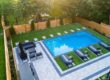
The rectangle is the most common pool shape, because it makes good use of space and suits families who swim laps or play games. It fits narrow backyards, since straight sides leave a clear strip of deck. Its clean lines also suit modern and minimalist homes.
Geometric Pools

A geometric pool uses straight lines and set angles, but it has no fixed shape. Designers use the angles to fit a yard that is not square, so the pool follows the lot instead of fighting it.
L-Shaped Pools

An L-shaped pool is a geometric design with a long side and a short side meeting at a right angle. The two arms create two zones, so one can serve laps and the other play or lounging. It works well when the yard wraps around the house.
Circular Pools

Circular pools suit open yards where the round shape can sit in the middle of the space. They break up large stretches of lawn and give families a shared central place to gather. In a narrow yard, a circle wastes space and leaves little deck.
Freeform Pools

Freeform pools, sometimes called radius pools, use curves and arcs instead of straight lines. They suit homeowners who want a natural look, and they soften the hard angles of a square yard. Plan the cover early, because a curved shape often needs a custom-fitted cover.
Grecian Pools

A Grecian pool is a rectangle with rounded inside corners. It gives a classic, formal look while keeping the straight sides that make a rectangle practical, and it has been a popular choice for decades.
Roman Pools

A Roman pool is a rectangle whose short ends curve outward, which adds length. The curved ends often serve as shallow seating or steps. It suits homes with classic architecture.
Lap, Plunge and Kidney Pools
Three more designs come up often in the GTA. A lap pool is long and narrow, so it suits fitness swimmers and slim lots. A plunge pool is compact and built for cooling off, which makes it a fit for small city yards. A kidney-shaped pool is a classic curved design with a defined shallow and deep end, and it suits medium yards.
Many older Toronto neighbourhoods have narrower, shorter yards than newer subdivisions in Vaughan or Richmond Hill. A lap or plunge pool often makes more sense on a compact city lot, while a freeform or larger geometric pool suits a deeper suburban lot.
If none of these fits your vision, a designer can create a custom shape for your property. See our top 30 swimming pool designs and our backyard pool design ideas for more inspiration.
How Do You Choose the Right Pool Shape?
Work through these decisions in order. They are the same questions a designer asks at the first consultation.
| Decision | Why it matters |
|---|---|
| How you will use the pool | Laps need length, play needs shallow space and entertaining needs deck around the water |
| Usable yard space | Fence, gate, setbacks and deck all take space, so measure what is left after them |
| Your house style | The pool should feel like part of the property, not an addition that clashes with it |
| Position and light | Sun, shade and nearby trees affect comfort and how fast leaves reach the water |
| Safety needs | Children or pets change the fence, gate and deck layout |
| Landscaping plan | Plants, lighting and hardscape work best when planned with the pool |
| Budget range | Settle this before the design is final, so the design fits the budget |
In practice, the use and the space decide most of the answer. A family that wants laps and play often ends up with a rectangle or an L shape, while a household that wants a natural look and has the room often prefers a freeform pool. Ask your designer to place two or three shapes on a scale plan before you choose, and read our guide to 3D pool design to see how a model helps.
Check the Position Before the Shape
Decide where the pool will sit before you fix the shape. Avoid placing it directly under trees, since leaves and debris reach the water faster. Think about sun and shade across the day, and the view from the rooms you use most. For tight lots, see our small backyard pool designs.
How Does Pool Shape Affect Cost and Upkeep?
Shape changes both cost and upkeep. Simple shapes with straight edges are usually the most economical to build, because forming and finishing are simpler. Curves, angles and custom features add work, and a custom cover adds to the total. Size, pool type, features and site conditions often move the price as much as shape does. Our pool construction cost guide explains the main cost drivers, and our comparison of fiberglass, vinyl and concrete pools shows how pool type affects the design choices.
Upkeep follows the same pattern. Pools with more steps, ledges and corners give debris more places to collect, so they take more cleaning time. A simple rectangle is generally the easiest to keep clean.
Which Pool Features Should You Plan With the Design?
Features change the structure, the equipment and the budget, so decide them together with the shape rather than after it. Some can be added later, but a spa attached to the pool, an infinity edge or a tanning ledge are far easier to build with the pool than to retrofit.
- Lighting. LED fixtures extend evening use and add safety around the water. Curved pools need more careful fixture placement than a rectangle. See our guide to choosing pool lighting in Toronto.
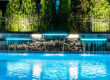
- Water features. Waterfalls add sound and a focal point, and fountain bubblers suit smaller pools and children. Read what a pool waterfall costs or how to install a pool fountain.
- Spa or hot tub. Warm water stretches the Toronto swim season. Compare the options in our guide to adding a spa to your pool, or see whether you can add a hot tub to a fiberglass pool.
- Tanning ledge. A shallow shelf gives children a safe place to play and adults a place to lounge. Here is how a tanning ledge pool changes the backyard.
- Resistance jets and lap lanes. A current to swim against makes a modest pool work like a longer one. For serious fitness swimming, read how to build a lap pool that fits your lifestyle.
- Heating, safety cover and automation. These cost less than showpieces and get used every week, so most owners add them first.
- Fire and deck features. Seating and a fire feature turn the pool area into an outdoor living space. See our idea for pool landscaping with fire.
Add features in this order: safety and code first, then what you will use weekly, then comfort, then showpieces. Ask your builder to price every feature as its own line item, and share the full feature list early so the permit drawings cover it. If you already own a pool and want to add features, our pool remodel guide shows what suits a renovation.
What Fence and Safety Rules Affect Pool Design?
Safety rules shape the layout, so settle them with the design. In Toronto, for example, the pool enclosure must be at least 1.2 m high, with a self-closing, self-latching gate. The fence also has to sit at a set distance from the pool edge, which changes how much deck remains. Rules vary by municipality, so check yours before you finalize the shape. Our guide to Ontario pool fencing regulations explains what to expect.
If children or pets use the yard, keep seating and play furniture away from the fence so nothing becomes a step over it. A designer can show the fence, the gate and the furniture on the plan.
Plan the Landscape With the Pool
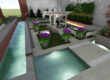
Plants, lighting, shade and hardscape belong in the pool design, not after it. A good plan decides the paths, the seating and the privacy at the same time as the shape. Our pool and landscape design service and our backyard swimming pool design projects show how this looks on real properties.
Frequently Asked Questions About Swimming Pool Design
What is the most popular backyard pool design?
Rectangular pools are the most common backyard pool design. They suit lap swimming, fit most lots, cost less to build than curved shapes and pair well with modern homes. Freeform and L-shaped designs come next, usually on lots where a straight-edged pool would leave awkward space.
Which pool shape is best for a small backyard?
Rectangular and L-shaped pools use small lots well, because straight sides leave usable deck beside the water. A plunge or compact lap pool also works where space is tight. Ask your designer to place each shape on a scale plan, so you can see the deck space that remains.
Is a freeform or geometric pool better?
It depends on the yard and the look you want. Geometric pools suit modern homes, lap swimming and tight lots. Freeform pools suit larger, irregular yards and a natural look. Freeform shapes usually cost more to build and may need a custom-fitted cover.
How much does pool shape affect the cost?
Shape changes the cost, because curves, angles and custom features add forming, finishing and cover work. Simple shapes are usually the most economical. The pool type, size, features and site conditions often change the price more than shape alone, so ask for quotes on your chosen design.
Do I need a fence regardless of pool design?
Yes. Every residential pool needs an enclosure that meets local rules, and the fence affects how much deck you have. In Toronto, for example, the pool fence must be at least 1.2 m high with a self-closing, self-latching gate. Check your municipality’s by-law before you finalize the design.
How do I choose a pool shape before meeting a designer?
Decide three things first: how the family will use the pool, how much usable space the yard has, and which style suits your house. Add your budget range and any safety needs for children or pets. With those answers, a designer can narrow the shapes and show them on your lot.
Which pool features should I plan with the design?
Plan anything that changes the structure or equipment with the design: an attached spa, an infinity edge, a tanning ledge, lighting, heating and automation. Lighting, covers and some water features can be added later, but structural features are far easier and cheaper to build with the pool.
Design Your Backyard Pool With Land-Con Pools
Our designers measure your property, show you shapes on a scale plan and build a 3D design you can review before construction starts. Call 416.504.5263 or email info@landcon.ca to book a free initial consultation. Our service regions include Toronto, Markham, Etobicoke, Vaughan, Mississauga, Richmond Hill, Barrie, Brampton, Hamilton, Ottawa, Woodbridge, North York and the surrounding GTA. See our swimming pools in Toronto page for more.
About the author: This guide comes from the Land-Con Pools team, a Toronto-based pool design and construction company with 25+ years of experience building custom pools across the GTA.