Last Updated: November 2026
A pool that is cleaned every week costs less to run and lasts longer than one that is cleaned when the water turns green. In Toronto, where the swimming season is short and the freeze-thaw cycle is hard on equipment, a steady routine is the cheapest form of pool insurance.
Weekly pool maintenance is the routine of skimming, brushing, vacuuming, cleaning the filter and testing and balancing the water once a week. For most Toronto pools this takes one to two hours and keeps the water clear, the equipment efficient and the surfaces free of algae and scale.
As pool builders who have designed and built pools across Toronto and the GTA for 25+ years, the Land-Con Pools team wrote this guide for homeowners. You will see why weekly care matters, how to set your own frequency, the supplies you need, the ten weekly tasks, how the routine changes through Ontario’s seasons and pool types, and when to call a professional.
Why Does Weekly Pool Maintenance Matter?
A Clean and Safe Swimming Environment
Regular maintenance keeps the water clear and free from harmful bacteria and algae. Clean water looks inviting and is safe for your family and guests.
Preventing Costly Repairs
Debris and chemical imbalances build up quickly and can damage pool equipment and surfaces over time. A weekly routine catches small problems before they become repairs.
Water Quality
Balanced water chemistry protects both swimmers and the pool itself. Testing every week lets you adjust pH, chlorine and other levels before the water becomes uncomfortable or starts to corrode fittings.
Energy Efficiency
A clean filter and clear baskets let the pump move water with less strain, which reduces energy use and wear on the equipment.
Curb Appeal
A clear, well-kept pool improves the look of your yard and the value of your property, whether you swim daily or host a few weekends a summer.
How Often Should You Clean a Pool?
Clean the pool once a week as a baseline, and test the water at least weekly in summer. Pools under trees, pools with heavy use and pools in hot spells need skimming and basket checks every day or two. Cover use and pool type also change the schedule.
These factors decide where your pool sits:
- Usage: Family pools and pools used for entertaining need more frequent cleaning and chemical checks than pools used occasionally.
- Climate: Hot Toronto summers increase evaporation and use up chlorine faster, so the water needs more frequent testing. In spring and fall, falling leaves and cold-water swings change the work.
- Foliage: Trees and shrubs near the pool add leaves, pollen and seeds to the water.
- Pool cover: A cover used when the pool is not in use keeps debris out and cuts the cleaning time.
- Size and type of pool: Larger pools take longer, and saltwater, vinyl liner, fiberglass and concrete pools each have their own needs, covered below.
What Supplies Do You Need for Weekly Pool Cleaning?
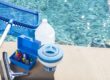
Keep these on hand so the weekly job does not stall:
- Pool skimmer: A net on a telescoping pole that removes leaves, bugs and debris from the surface.
- Pool brush: Scrubs the walls, steps and corners to prevent algae and buildup. Use a brush suited to your pool surface.
- Pool vacuum: Removes dirt and debris from the floor. Manual, automatic and robotic models are available.
- Water testing kit: Measures pH, chlorine, alkalinity and cyanuric acid. Our guide to testing your pool water explains how to read the results.
- Chemicals: Chlorine or another sanitizer, shock, pH adjusters and algaecide, stored safely and used by the label.
- Filter tools: A hose or backwash setup, plus a cartridge cleaner if your filter uses cartridges.
- Telescoping pole: Holds the skimmer, brush and vacuum head so you can reach every part of the pool.
What Are the 10 Weekly Pool Maintenance Tasks?
Work through these in order each week. The order matters: clear debris first, then brush, vacuum and filter, and test and adjust the water last.
1. Check the Baskets
Empty the skimmer and pump baskets. Full baskets restrict water flow and strain the circulation system.
2. Skim the Leaves
Skim the surface to remove leaves, insects and debris. Removing them while they float stops them from sinking and feeding algae.
3. Brush
Brush the walls, steps and corners, with extra attention to low-circulation areas such as corners and behind ladders, where algae starts first.
4. Vacuum
Vacuum the pool floor so no debris is left to decay on the bottom.
5. Clean the Filter
Clean or backwash the filter following the manufacturer’s instructions for your type (sand, cartridge or diatomaceous earth). A clean filter improves clarity and circulation.
6. Adjust the Water Level
Keep the water at about the middle of the skimmer opening or at the tile line, and top it up in hot, dry spells. If the level drops faster than evaporation explains, read our guide to pool leak detection signs.
7. Check Calcium Hardness
Test calcium hardness regularly. Low hardness can etch surfaces, and high hardness can leave scale. The right range depends on your pool type, so follow your builder’s or surface manufacturer’s guidance.
8. Adjust Total Alkalinity
Total alkalinity stabilizes pH. A common target is 80 to 120 ppm.
9. Adjust pH
Keep pH between 7.4 and 7.6 for swimmer comfort and to protect equipment from corrosion. Use a pH increaser or decreaser as the test shows.
10. Adjust Sanitizer Levels
Test chlorine or bromine and bring it into range. For a chlorine pool, free chlorine of about 1 to 3 ppm is the usual target. In an outdoor pool, cyanuric acid (commonly kept near 30 to 50 ppm) protects chlorine from sunlight, so test it too.
If the weekly routine feels like too much, a professional service can take it over, as covered further down.
What Does a Daily, Weekly and Monthly Pool Maintenance Schedule Look Like?
Split the work by frequency so nothing is skipped:
- Every day or two in summer: Skim the surface, empty the skimmer basket and check that the pump is circulating.
- Every week: Complete the ten tasks above, including a full water test.
- Every month: Deep-clean the filter, check the pump and heater for leaks or noise, test cyanuric acid and calcium hardness, and look over the pool surface and tiles for cracks or stains.
- Twice a year: Open the pool in spring and close it for winter.
How Does Pool Maintenance Change Through Ontario’s Seasons?
Ontario’s seasons change the job more than any other factor. The weekly routine stays the same, but the emphasis shifts from opening to chemistry to leaf control to protection.
Spring: Opening the Pool
Open the pool early, while the water is still cool, because warm water speeds up algae growth. Remove and clean the cover, reconnect the equipment, refill to the working level and rebalance the water before the first swim. Clear any leaves from the cover and surface before you open, and inspect tiles, fittings and the liner for winter damage.
Summer: Chemistry and Heat
Heat and heavy use burn through chlorine faster, so test at least weekly and after storms or parties. Keep the baskets empty and run the filter long enough to turn the water over each day. Check cyanuric acid, since too little lets sunlight destroy chlorine and too much weakens it.
Fall: Leaves and Closing
Skim often once leaves start to fall, because leaves left in the water stain surfaces and feed algae. Most Ontario owners close in September or October, once the water holds at about 18°C (65°F) or below. Our pool closing guide walks through the steps in order.
Winter: Protecting a Closed Pool
A closed pool still needs attention. Clear snow and standing water from the cover, and check the water level against your cover manufacturer’s guidance. Equipment that sits through hard frost can crack, which is why our guide on pool pumps and filters in cold weather is worth reading before the first freeze.
How Does Weekly Maintenance Differ by Pool Type?
The ten tasks apply to every pool, but the details change with the surface and the sanitizer.
- Vinyl liner pools: Use a soft brush, keep the water balanced so the liner does not fade or wrinkle, and never let the pool run low. Our vinyl liner maintenance guide covers the details.
- Fiberglass pools: The smooth gelcoat resists algae and needs less brushing, but it still needs balanced water to prevent staining. See our fiberglass pools page for how these pools are built and cared for.
- Concrete pools: The textured finish holds algae more easily, so brushing matters more, and calcium hardness needs close watching to protect the surface. Our concrete pool page explains the finish options.
- Saltwater pools: The chlorine generator makes the sanitizer, but you still test the water weekly and inspect the cell. Our saltwater vs chlorine comparison shows what changes.
How Do You Fix Common Pool Problems?
Even with a good routine, problems appear. Here is how to handle the most common ones in a Toronto pool:
1. Green Water
Green water is usually algae. Shock the pool following the product label, then brush, vacuum and run the filter until the water clears. Our guide to preventing pool algae explains how to keep it from returning.
2. Cloudy Water
Cloudy water usually comes from unbalanced pH or alkalinity, or from a dirty or undersized filter. Test the water, correct the balance and clean the filter. Our guide to cloudy pool water goes through each cause.
3. Low Water Flow
Low flow is usually a full skimmer or pump basket, a dirty filter or an air leak on the suction side. Check and clean the baskets and the filter first, then inspect the pump.
4. Stains on Pool Surfaces
Stains come from metals or organic matter in the water. Use a stain remover suited to your pool surface, follow the label and keep the water balanced to prevent them returning.
5. Persistent Algae Growth
Algae that keeps coming back points to low sanitizer or poor circulation. Check the chlorine and cyanuric acid, brush and vacuum every area, and confirm that the pump runs long enough each day.
6. Pump or Filter Issues
Unusual noise, a rising pressure gauge or weak return flow means the equipment needs inspection. A professional can diagnose and repair the system before a small fault turns into a replacement.
How Much Does Weekly Pool Maintenance Cost in Toronto?
Cost depends on pool size, pool type, how often visits happen and whether chemicals are included. Doing the work yourself costs mainly chemicals and supplies, while a service adds labour and a visit schedule. For a breakdown by pool material and service type, read our guide to pool maintenance costs in Toronto.
Should You Hire a Professional Pool Maintenance Service?
DIY care works well for many owners, but there are good reasons to hire pool maintenance experts in Toronto, especially when the pool is large, complex or hard to keep clear.
1. Expertise and Experience
Professionals know how Toronto’s climate and conditions affect pools, and they diagnose problems quickly.
2. Time Savings
Weekly care takes time out of your summer. A service gives that time back.
3. Comprehensive Service
A professional visit covers chemical balancing, equipment inspection and filter cleaning in one trip.
4. Preventative Maintenance
Experts spot small faults early, which avoids larger repair bills.
5. Proper Chemical Handling
Pool chemicals are hazardous if mishandled. Trained technicians store, measure and apply them safely.
6. Equipment Efficiency
Well-maintained equipment uses less energy and lasts longer.
7. Consistency
A set schedule delivers steadier water quality than occasional catch-up cleaning.
8. Peace of Mind
Knowing the pool is checked on schedule means it is ready whenever you want to swim.
Pool Maintenance FAQs
How often should a pool be cleaned?
Clean a pool once a week as a baseline, and test the water at least weekly in summer. Pools under trees, pools with heavy use and pools in hot spells need skimming and basket checks every day or two. A cover and a clean filter reduce how often the pool needs deep cleaning.
How long does it take to clean a pool weekly?
Most homeowners spend one to two hours a week, depending on pool size, the amount of debris and the tasks involved. Larger pools, pools under trees and pools with unbalanced water take longer, while a pool with a cover and a robotic cleaner usually takes less.
What are the most important weekly pool maintenance tasks?
Skimming, emptying the baskets, brushing, vacuuming, cleaning the filter and testing and balancing the water are the core tasks. Of these, water testing matters most, because chemistry problems cause algae, cloudy water and surface damage, and they are harder to fix once they start.
How much does weekly pool maintenance cost in Toronto?
The cost depends on pool size, pool type, visit frequency and whether chemicals are included. DIY care costs mainly chemicals and supplies, while a service adds labour and a regular visit schedule. Ask any provider for a written quote that lists what each visit covers, so you can compare services fairly.
When should I open and close my pool in Ontario?
Most owners open in spring once nights stop freezing, and close in September or October when the water holds at about 18°C (65°F) or below. Open early while the water is still cool, because warm water speeds up algae, and close before the first hard frost so water left in the plumbing cannot freeze.
Can I use household cleaning products to clean my pool?
No. Household cleaners are not made for pool water and can upset the chemistry, foam in the water and harm pool surfaces or equipment. Use products made specifically for pools, measure them carefully and follow the manufacturer’s label for dosing and safety.
How often should I replace my pool filter?
It depends on the filter type and how well it is maintained. Cartridge filters often need replacing every two to five years, and sand typically needs changing every five to seven years. Replace sooner if water clarity drops or filtration efficiency falls, and ask a professional if you are unsure.
Get Pool Building and Maintenance Help From Land-Con Pools
Land-Con Pools designs and builds custom pools across Toronto and the GTA, and we also help owners keep them in good shape. Whether you want a weekly routine set up, a seasonal opening or closing, or advice on caring for your pool type, our team will walk you through it.
Our service regions include Toronto, Markham, Etobicoke, Vaughan, Mississauga, Richmond Hill, Barrie, Brampton, Hamilton, Ottawa, Woodbridge, North York and the surrounding GTA.
Call us at 416.504.5263 or email info@landcon.ca to talk about pool maintenance for your pool. You can also read more about our company.