Last updated: August 2026
Direct Answer: Plunge, cocktail, and dipping pools let Toronto homeowners with small yards fit a permanent inground pool where a standard-size pool wouldn’t meet setback requirements. Fiberglass is the preferred material for compact pools since it’s crane-installed in a single piece, handles Ontario’s freeze-thaw cycles well, and typically starts around $50,000 to $75,000+ depending on options.
Do you dream of having a beautiful pool in your backyard? Do you look at your property lines and think it is impossible?
You are not alone. Most homeowners in Toronto and the GTA face the same problem. Lot sizes are shrinking. Houses are getting bigger. This leaves very little room for outdoor living spaces.
In the past, a small yard meant you had to give up on the dream of a pool. You had to settle for a sprinkler or a temporary inflatable tub.
That is no longer the case.
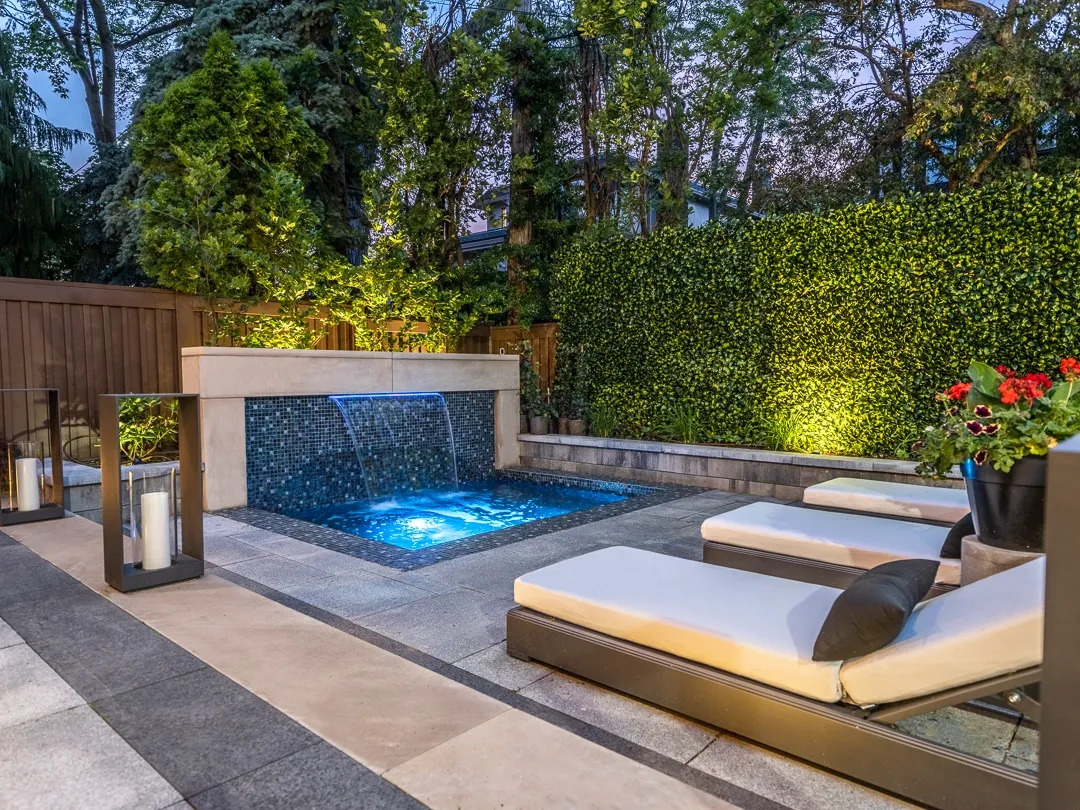
Modern construction has changed the industry entirely. You can now have a stunning, permanent inground pool in a very tight space. The solution lies in three specific designs. These are the plunge pool, the dipping pool, and the cocktail pool.
These compact pools are changing how families enjoy their summers. They provide a place to cool off without taking up the entire lawn. They are efficient and stylish. They are also much easier to maintain than massive swimming pools.
We are going to walk you through everything you need to know. We will cover the differences between designs and the real costs involved. We will also explain why fiberglass is the best material for our Canadian climate.
The Rise of Compact Pools
The trend toward smaller pools is not just about saving space. It is about a lifestyle change.
Many people realize they do not need a 40-foot pool. They do not swim laps every morning. They want a social hub. They want a place to relax with a drink or let the kids splash around.
A massive pool requires a lot of work. You spend hours cleaning it. You spend a fortune heating it. A compact pool offers the same refreshment with a fraction of the effort.
This shift in demand has led to better designs. Manufacturers now create tiny shells specifically for urban homes. These are not just shrunken versions of big pools. They are designed with seating and social features in mind.
The Real Difference Between Plunge and Cocktail Pools
You will hear many terms thrown around. It can get confusing.
The terms ‘plunge pool’ and ‘cocktail pool’ are frequently used interchangeably. There are differences. It helps to know them before you start shopping.
The Classic Plunge Pool
A plunge pool is usually rectangular. It is designed for cooling off and light exercise.
The defining feature is the depth. A plunge pool typically has a flat bottom. It is usually 4 to 5 feet deep across the entire length. Some custom options go deeper.
This depth allows for water aerobics. You can stand in chest-deep water and move against the resistance. It is great for health and fitness. It is also perfect for cooling down after a sauna or hot tub session.
The Cocktail Pool
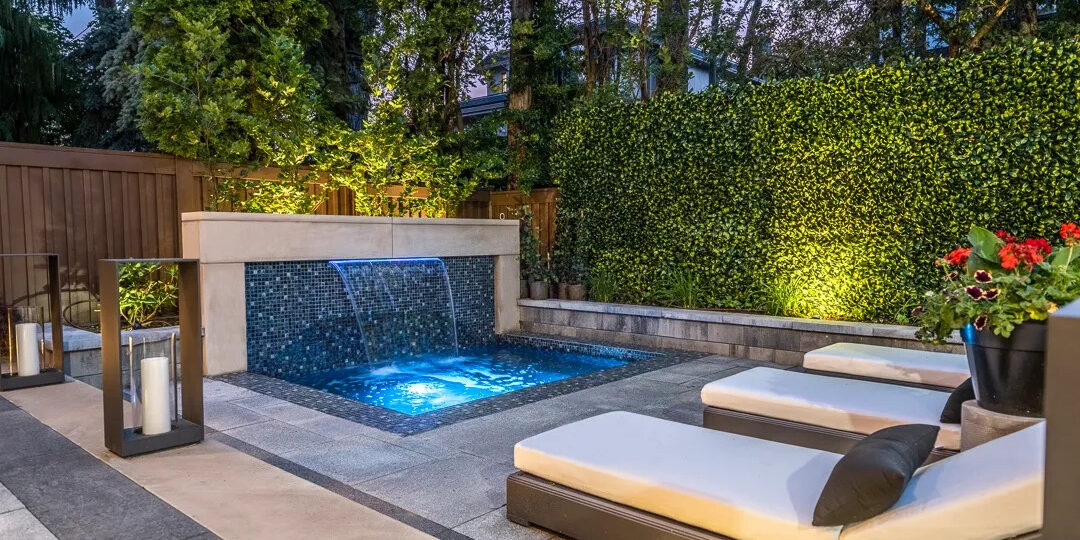
This pool is the ultimate social spot. Think of it as a party host’s dream.
Cocktail pools are often shallower than plunge pools. They range from 3 to 4 feet deep. They are designed for sitting rather than standing or swimming.
Most cocktail pools come with built-in benches. These benches often wrap around the entire interior. You sit comfortably with your friends while submerged in the water. You can add jets to the benches for a massage effect.
The Dipping Pool
A dipping pool is exactly what it sounds like. It is a shallow basin for a quick dip.
These are often smaller than the other two types. They are sometimes called wading pools. They are great for tanning or letting young children play under supervision. They use the least amount of water and energy.
Swim Jets: Getting Both Fitness and Relaxation From One Pool
If limited space is your main concern but you still want a real workout option, swim jets solve this well. Installed at one end of a plunge or cocktail pool, jets create a current strong enough to swim against in place — you get a genuine lap-swimming workout in a fraction of the footprint a traditional lap pool would need. Switch the jets off afterward, and the same pool becomes a calm space to relax and unwind. It’s a practical way to get two very different pool experiences out of one compact footprint.
Why Fiberglass Pool Builders Recommend Plunge Models
You can build a small pool out of concrete or vinyl. However, there is a reason pros prefer fiberglass.
Fiberglass shells are built in a factory. They are made on a mould. This ensures every curve and bench is perfect. There are no seams or liners to worry about.
Strength and Durability
Our climate in Ontario is tough on pools. We have freezing winters and hot summers. The ground freezes and expands. Then it thaws and settles.
Concrete is rigid. If the ground moves too much, concrete can crack. Fixing a structural crack in a concrete pool is a nightmare. It costs thousands of dollars.
Fiberglass has a unique property. It has flexural strength. It can flex slightly with the ground movement. It absorbs the stress instead of cracking. This makes it the most durable option for our weather.
Surface Quality
Concrete feels rough on your feet. It can scrape the skin of active kids. Vinyl liners are smooth but they can tear. A dog’s claws or a sharp toy can rip a liner easily.
Fiberglass is smooth and tough. It has a gel coat finish. This finish is non-porous. It feels like a smooth bathtub. It is comfortable to sit on for hours. It is also very hard to scratch or damage.
Adaptable to Narrow and Asymmetrical Lots
Because fiberglass shells are pre-manufactured, they come in a wide range of sizes and shapes — including options built specifically for narrow backyards and oddly-shaped or asymmetrical lots, which are common on older Toronto properties. Rather than forcing a rectangular footprint onto an irregular yard, there’s usually a shell profile that works with the space you actually have, not the space a standard pool would need.
How Fiberglass Pool Builders Handle Tight Access
One of the biggest challenges in Toronto is getting the pool into the yard.
Many homes have narrow side yards. Some have no side access at all. You might live in a row house or a semi-detached home.
Building a concrete pool in these spots is difficult. Crews have to haul wet concrete and steel bars through the house or over fences. It is messy and takes months.
The Crane Solution
Fiberglass installation is different. The pool arrives as a single piece on a truck.
We use a crane to lift the pool. We can lift it over your house. We can lift it over trees or garages. We lower it directly into the excavated hole.
This entire process takes a few hours. Your neighbours are not disturbed for weeks on end. There is no parade of cement trucks blocking your street.
This speed is a huge advantage. You do not want your yard to be a construction zone for the whole summer. You want to be swimming.
Not Sure a Pool Fits in Your Yard? Let’s Find Out!
Zoning and Permits in the GTA
You cannot just dig a hole and drop a pool in. You have to follow the rules.
Every municipality has zoning bylaws. These rules dictate where a pool can go. They are often strict about setbacks. A setback is the distance between the water and your property line.
The Small Yard Advantage
Standard setbacks in many areas are 1.2 meters to 1.5 meters. If you try to fit a large pool, you might run out of room. You might hit the setback limits on all sides.
Compact pools fit where others cannot. A 10-foot-wide plunge pool leaves plenty of room for setbacks. You can often fit a plunge pool in a yard that was rejected for a traditional pool.
Permit Process
You still need a permit. You need a zoning certificate. You need a pool enclosure permit. This ensures your fence is safe and meets code.
Your pool builder should handle this. We know the inspectors. We know what drawings they need. We handle the paperwork so you do not have to stress about it.
What Fiberglass Pool Builders Want You to Know About Costs
Price is always a big factor. People assume a small pool is cheap.
A compact model will naturally come with a lower price tag than a standard-sized swimming pool. However, it is still a significant investment. You are building a permanent structure that adds value to your home.
The Base Cost
A high-quality fiberglass plunge pool project usually starts around $50,000. This can go up to $75,000 or more, depending on options.
This price includes the shell itself. It includes the shipping and the crane rental. It includes the pump, filter, and basic equipment. It also covers the excavation and installation labour.
Variable Costs
There are site-specific costs that change for every home.
Soil removal is a big one. Digging a hole creates a lot of dirt. If we cannot roll it out with a wheelbarrow, we have to crane it out. That adds to the cost.
Electrical work is another factor. You need a licensed electrician to hook up the equipment. The distance from your panel to the pool pad affects the price.
Finishing Touches
The area around the pool costs money, too. You need a patio or deck. You need a safety fence. These are separate from the pool contract but are part of your total budget.
Energy Efficiency and Heating
Heating a pool in Ontario can get expensive. Energy rates are high.
This is where small pools shine. A plunge pool holds much less water than a standard pool. A typical plunge pool might hold 2,000 to 5,000 gallons. A standard pool holds 20,000 gallons or more.
Heating 5,000 gallons is fast. You can bring the temperature up quickly for a weekend swim. You do not have to keep it hot all week if you are not using it.
Insulation Benefits
Fiberglass acts as a natural insulator. It holds heat better than concrete or vinyl. The ground pulls heat away from the concrete very fast. Fiberglass creates a thermal barrier.
This means your heater runs less often. You save money on gas or electricity every single month. You can afford to keep your plunge pool at a warmer temperature. You can extend your swimming season into late September or October.
The Installation Timeline Explained
How long does it really take?
A traditional concrete build takes 2 to 3 months, sometimes longer if the weather is bad.
A fiberglass pool installation is measured in days or weeks.
Day 1: The Dig. The crew arrives. They mark the spot. They excavate the soil. They bring in the gravel base.
Day 2: The Set. The pool arrives. The crane lifts it in. We level it perfectly. We start filling it with water immediately. The weight of the water helps set the pool.
Day 3: Plumbing and Backfill. We hook up the pipes. We backfill around the shell with gravel. This locks the pool in place.
Day 4: Structural Collar. We pour a concrete ring around the top. This locks the coping in place.
Day 5 and Beyond. The pool is technically ready for water. The rest of the time is for your patio and fence. You can be swimming very quickly.
Winterizing a Compact Fiberglass Pool
Small doesn’t mean maintenance-free through Ontario winters — a compact fiberglass pool still needs proper winterization every fall. This typically means draining the pool to a set level below the returns, giving it a thorough cleaning, and covering it to protect against ice and debris. Pool equipment needs winterizing too. Because plunge and cocktail pools hold less water than a standard pool, this process is usually faster than winterizing a full-size pool, but skipping it still risks the same issues — cracking and surface damage from freeze expansion.
Resale Value in Toronto
Does a pool add value to your home?
In the past, some people saw pools as a burden. That has changed. The demand for staycation homes is high. People want a finished backyard.
A massive pool that takes up the whole yard can be a negative. It leaves no room for anything else.
A plunge pool is a positive asset. It leaves room for a garden and a BBQ area. It looks high-end. It is low maintenance. Buyers see it as a luxury feature, not a chore.
This feature gives your property a distinct edge when you decide to sell. It offers a lifestyle that other homes do not have.
Choosing the Right Builder
This is the most critical decision you will make.
Not all pool companies are the same. You need a team that understands limited access. You need a team that knows the local bylaws.
Check Their Experience: Ask to see photos of their small yard projects. Ask for references. Ask specifically about their crane experience.
Verify Insurance: Make sure they have WSIB coverage. Make sure they have liability insurance. You are bringing heavy equipment onto your property. You need to be protected.
Get a Detailed Quote: Do not accept a rough estimate. Get a quote that lists everything. It should list the crane, the dirt disposal, and the permit fees. You do not want surprises later.
Frequently Asked Questions
Can I use a plunge pool in the winter?
You generally winterize the pool in Ontario. You drain the water below the returns and cover it. However, if you have a great heater and an insulated cover, you can extend the season. Most people close them for the harsh months to save energy.
How long do fiberglass shells last?
They last a very long time. Many come with lifetime structural warranties. The gel coat might need buffing after 15 or 20 years, but the shell itself is robust.
Is salt water better for small pools?
Yes. Saltwater systems generate their own chlorine. The water feels softer on your skin. It is less harsh on your eyes. It is very popular for plunge pools.
Do I need a permit for a small pool in Toronto?
Yes. Regardless of size, all inground pools require city permits and zoning certificates. Professional fiberglass pool builders handle this paperwork to ensure full bylaw compliance for your property.
Will a plunge pool increase my home’s resale value?
Absolutely. A well-designed plunge pool transforms a small yard into a luxury retreat, increasing market value without dominating the lawn space like oversized traditional swimming pools do.
Can a compact pool fit an asymmetrical or narrow lot?
Yes. Fiberglass shells come in a range of sizes and shapes designed for narrow backyards and irregular lots, which are common on older Toronto properties.
Take the Next Step With Land-Con Pools
You do not have to give up on your dream. A small yard is not a barrier. It is an opportunity to build something unique and efficient.
A plunge or cocktail pool gives you the best of summer. It brings the family together. It gives you a private escape from the city stress.
At Land-Con Pools, we have helped hundreds of Toronto families transform their compact yards. We know how to handle the permits and the cranes for fiberglass pool installation. We know how to design a space that feels big even when the footage is small.
Stop looking at your fence line with regret. Start imagining the possibilities.
Would you like to know if a pool fits in your specific yard? Connect with Land-Con Pools at info@landcon.ca or call us at 416.504.5263. We can perform a satellite assessment of your property and give you a clear answer.